Most modern structures struggle to survive a century, yet a white-walled church in a remote Romanian village has stood the test of time for over 800 years. For those who appreciate structural integrity, historical preservation, and masterful masonry, Viscri is more than a tourist destination. It is a living case study in architectural resilience.
Here are the main insights on the Viscri fortified church:
- An 800-Year-Old Legacy: Viscri Fortified Church is a UNESCO World Heritage marvel in Transylvania. Originally a small chapel, Saxon settlers expanded it into a fortified refuge to survive medieval invasions.
- The Community Refuge: Designed to protect the immediate village during sudden raids, the church features a compact, highly efficient defensive perimeter with towers and bastions.
- Authentic Preservation: Following a mass Saxon emigration in the 1990s, the Mihai Eminescu Trust saved the church from ruin. Rather than using modern restoration methods, they equipped locals with centuries-old masonry skills, preserving the church’s original character and keeping it entirely authentic.
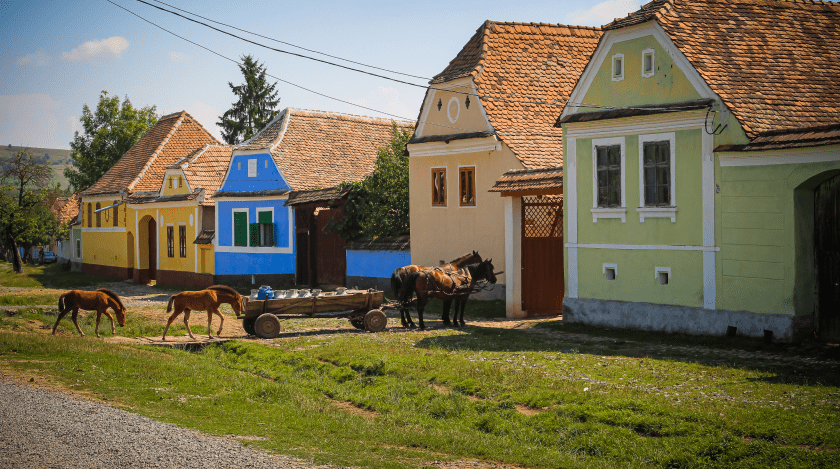
- A Living Time Capsule: The surrounding village fiercely rejects modern infrastructure in favor of a traditional, agrarian lifestyle. You will find brightly colored homes, horse-drawn carts, and a micro-economy sustained by active local craftsmen.
- The Origins and History of Viscri Village
- Architectural Anatomy of the Viscri Fortified Church
- Understanding UNESCO Status and Conservation
- Planning Your Route: How to Reach Viscri
- Exploring Viscri Village Beyond the Church
- Premium Accommodation and Dining in Transylvania
- Expanding Your Itinerary: Other Fortified Churches
- Your Action Plan
- Frequently Asked Questions about Viscri Fortified Church
The Origins and History of Viscri Village
Viscri village (meaning “German White Church”) is a remarkably preserved 12th-century settlement in Brașov County, Transylvania. Defined by its iconic white fortified church, the village was born out of the turbulent geopolitics of medieval Europe.
Here is exactly how the settlement evolved:
- The Border Crisis: The Hungarian Crown desperately needed a fortified buffer zone to protect its eastern frontiers from constant enemy incursions.
- The Original Foundation: The Szeklers (a Hungarian subgroup) initially settled the land and constructed a modest Romanesque chapel on the site.
- The Strategic Shift: During the reign of King Géza II, the crown engineered a massive demographic pivot to better secure the region.
- The Saxon Arrival: The king invited German settlers (the Transylvanian Saxons) to take over the territory. Their mission was straightforward: colonize the area, cultivate the rugged land, and serve as the ultimate frontline defense against invaders.
The Saxon Colonization Strategy
The Saxons brought with them advanced agricultural techniques, a strong guild system, and unparalleled masonry skills. When they took over Viscri, they didn’t tear down the existing Szekler chapel; they built it around and over it.
This period of Saxon colonization is the defining era of Viscri Transylvania. They operated under a unique legal framework called the Andreanum (Golden Charter of 1224), which granted them significant autonomy in exchange for military service.
From Chapel to Fortress
Between the 15th and 17th centuries, a worsening geopolitical climate and the looming threat of Ottoman and Tatar invasions forced the Saxons to adapt. Realizing that relying on distant royal armies was futile, they took community defense into their own hands.
This crisis triggered the radical transformation of the Viscri fortified church:
- Vertical Expansion: They aggressively raised the walls of the original basilica, adding dedicated defensive levels and firing platforms.
- Defensive Perimeters: The central religious structure was surrounded by a compact fortification to act as a survival refuge.
- Community Logistics: The complex was specifically designed to house the immediate village population alongside crucial grain and meat supplies, ensuring survival during sudden, intense raids.
- A Strategic Pivot: These historical pressures permanently transformed Viscri from a simple farming community into a vital, self-reliant node of European defense.
The Blueprint of the Viscri Fortified Church
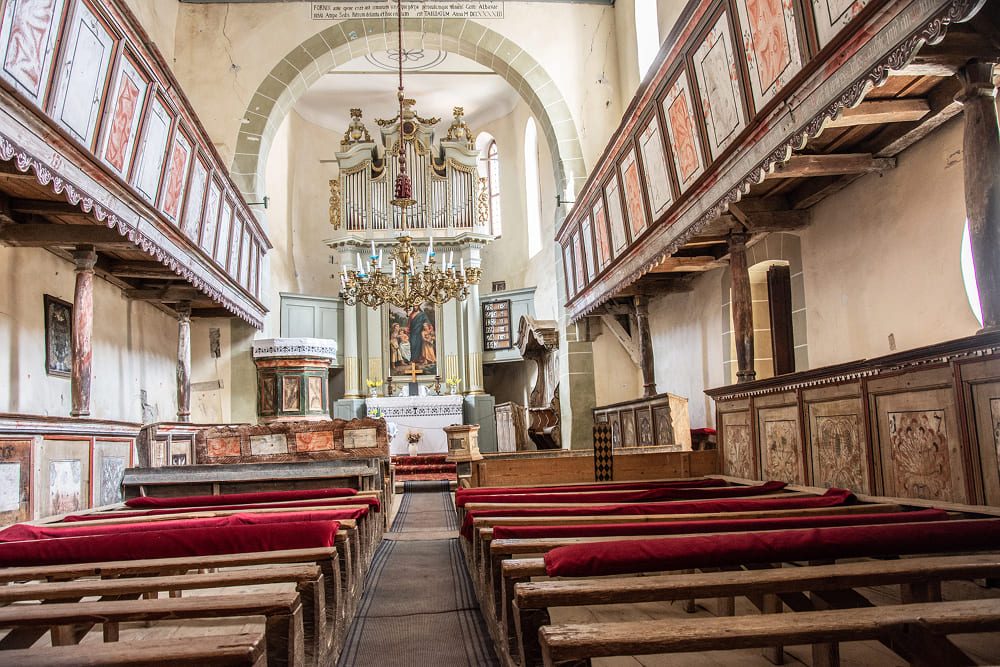
The Viscri Fortified Church represents a masterclass in defensive masonry, blending early Romanesque simplicity with practical, battle-tested Gothic fortifications to create a compact community refuge.
The genius of Saxon fortified churches lies in their dual-purpose engineering. At its core, the Viscri church features a single-nave design with a semi-circular apse. But the exterior tells a story of pure utility.
The Compact Defensive Network: Towers and Bastions
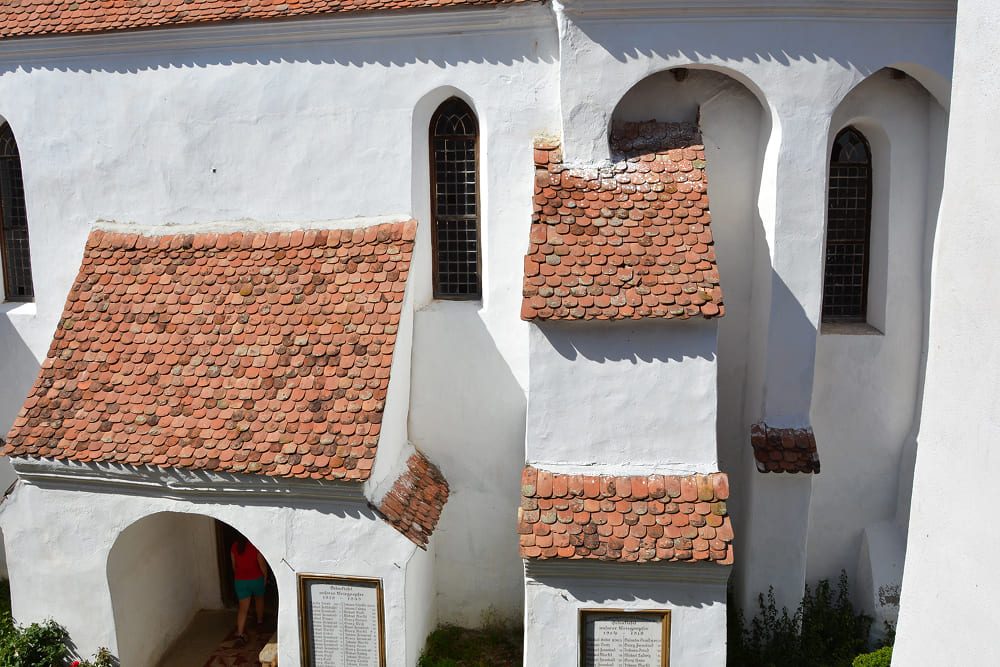
Unlike the sprawling fortifications of larger Transylvanian towns, the Viscri architectural complex relies on a highly efficient, compact defensive network. Originally built in the 12th century by the Szeklers as a simple Romanesque hall church, it was taken over by the Transylvanian Saxons in the 13th century. By the 15th century, and following its transition from a Roman Catholic parish to a Lutheran one during the Protestant Reformation, the structure was radically transformed into a military stronghold.
Here is the historically accurate breakdown of Viscri’s tactical fortifications based on official heritage records:
- The Oval Ring Wall: The primary defensive perimeter is a singular, tightly curved enclosure wall built from river stone and fieldstone, adapted to the hill’s natural topography.
- The Defense Gallery (Drum de apărare): The fortification features a continuous, elevated sentry walkway. This critical architectural element allowed village defenders to safely patrol the perimeter and rain down fire on attackers from a protected vantage point.
- The Gate Tower (Turn de poartă): The primary, heavily fortified choke point of the fortress, built to strictly control and restrict all physical access into the complex.
- Two Towers and Two Bastions: Rather than spreading their defenses thin, the Saxons concentrated their architectural firepower. The defensive perimeter relies on exactly two tactical towers and two flanking bastions. This concentrated layout eliminated blind spots and created a deadly crossfire matrix without requiring a massive army to man the walls.
Structural Mechanisms and The Interior Museum
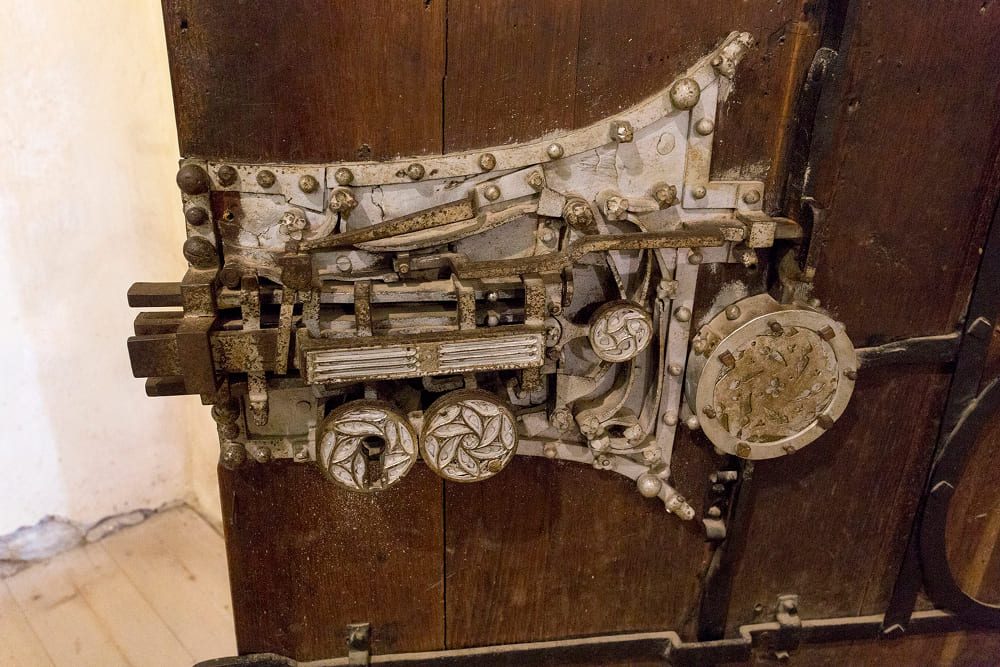
The architectural evolution is visible in the masonry. You can see where Romanesque arches were filled in or modified to support heavier, fortified upper levels. The ceiling features a painted wooden structure, a later addition that replaced heavier stone vaulting to reduce structural stress.
Today, the inner defensive rings house an extensive museum. The exhibits break down the daily life of the Saxons. You will find massive oak storage chests, traditional painted furniture, weaving looms, and agricultural tools. It is a raw look at a community that valued extreme self-reliance.
Comparative Analysis of Defensive Structures
| Feature | Standard European Castle | Viscri Fortified Church (Kirchenburg) | Lead Advantage |
| Primary Purpose | Protect nobility and the military. | Protect the immediate local community. | Ensured the survival of the agricultural workforce. |
| Logistics | Separate storehouses. | Built-in larder rooms. | Immediate access to food during sudden raids. |
| Architecture | High, sweeping towers for status. | Compact, efficient oval enclosure. | Maximized natural terrain; required fewer defenders. |
| Funding | Financed by kings/lords. | Financed by the local Saxon guilds. | Created deep community ownership and maintenance. |
Understanding UNESCO Status and Conservation
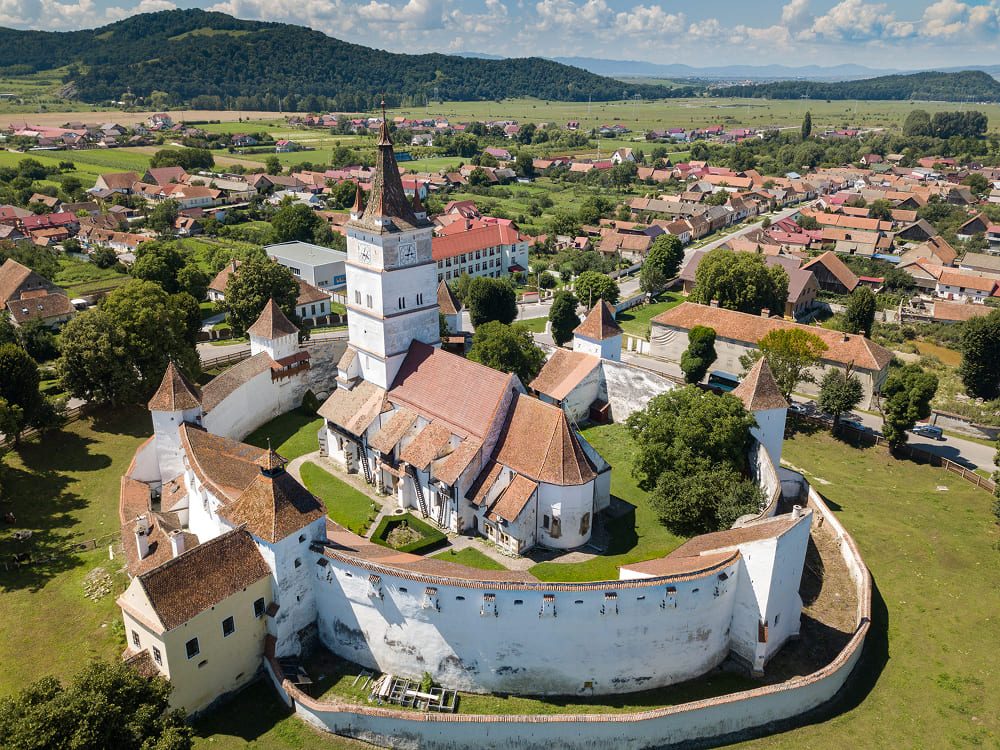
In 1993 (and expanded in 1999), the Viscri Fortified Church was officially inscribed as a UNESCO World Heritage site, recognized not just for its physical architecture, but as a crucial component of the “Villages with Fortified Churches in Transylvania” designation.
The criteria for this designation rested on its “outstanding universal value.” UNESCO recognized that fortified churches Romania possesses represent a unique architectural phenomenon. There were once nearly 300 of these structures across Transylvania; today, roughly 150 survive. Viscri is considered one of the most complete and unaltered examples.
Unlike many historical sites that were heavily, and sometimes inaccurately, restored during the 19th or 20th centuries, Viscri avoided over-restoration. Its uneven walls, original mortar, and organic integration into the surrounding village are exactly what conservationists prize.
The Role of The Mihai Eminescu Trust
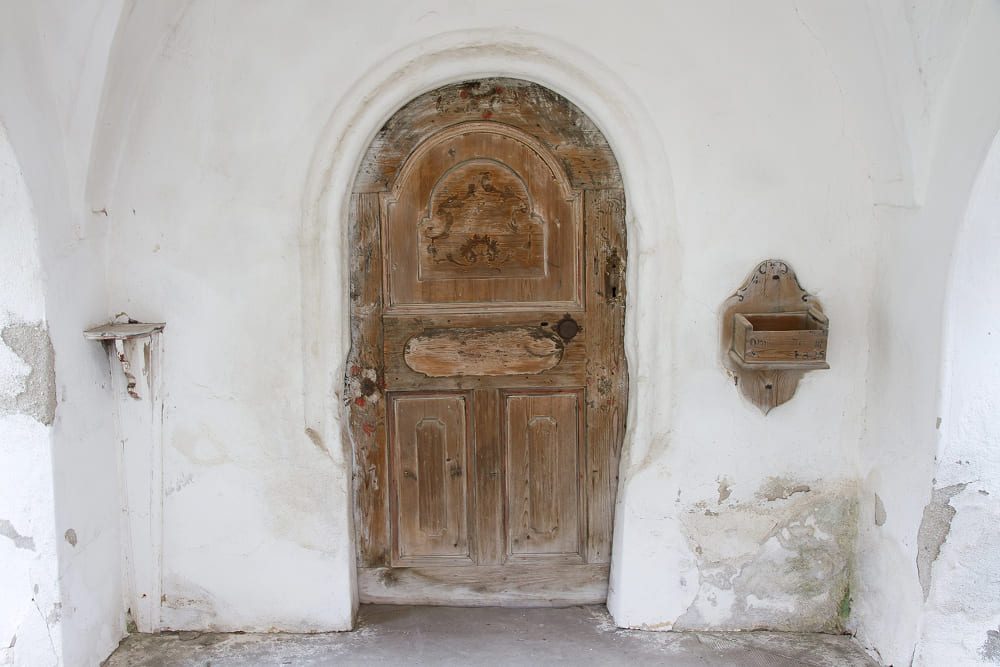
The preservation of Viscri UNESCO status hasn’t been easy. Following the fall of Communism in 1989, a massive exodus occurred. Nearly the entire Saxon population of Viscri emigrated to Germany, leaving their ancestral homes and the church vulnerable to decay.
This is where international intervention changed the course of history. The Mihai Eminescu Trust, championed actively by King Charles III (then Prince of Wales), stepped in. Instead of just patching up the church, they adopted a holistic approach. They trained local Romanians and Roma populations in traditional masonry, carpentry, and roof tiling. By doing so, they ensured that the skills required to maintain the fortified church remained within the village, turning conservation into an economic engine rather than a mere academic exercise.
Sustainable Tourism Challenges
Today, the challenge has shifted from neglect to over-tourism. Because of its fame, Viscri sees heavy foot traffic during the summer. Conservationists must carefully balance the influx of tourist revenue with the structural wear-and-tear on a 12th-century building, enforcing strict rules against unauthorized modifications and ensuring that modern infrastructure doesn’t destroy the medieval aesthetic.
Planning Your Route: How to Reach Viscri
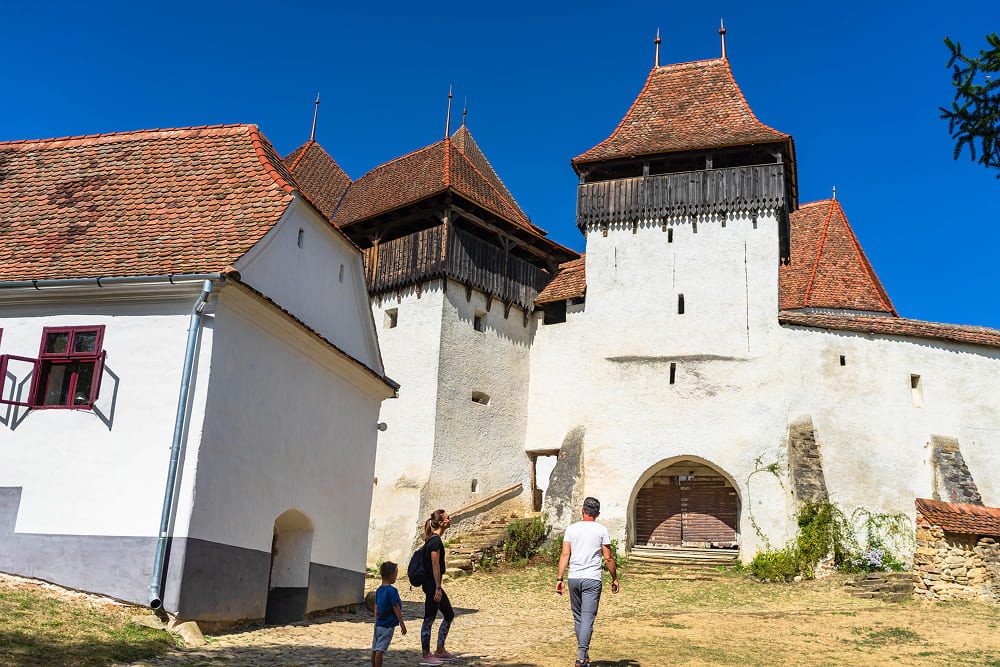
Accessing Viscri requires navigating the rural road networks of Brașov County. The journey itself acts as a physical transition from the modern world into an untouched medieval landscape.
Here is exactly what you need to know to plan your arrival seamlessly:
- The Viscri Brașov Route: The village is located approximately 45 kilometers from Brașov, making for a scenic 1 to 1.5-hour drive.
- Driving Directions: Take the primary DN13 (E60) highway towards Sighișoara, then turn off at the village of Bunești onto local county road DJ104L. While this final stretch was historically unpaved (adding to the remote charm), recent infrastructural improvements have made the drive much smoother.
- Transportation Reality Check: Public transit here is notoriously sparse. There are no direct trains, and local bus schedules from Rupea or Brașov are infrequent and subject to sudden changes.
- The Optimal Strategy: For international visitors seeking efficiency, renting a car or booking a curated private tour through Valea Verde is a reliable option to navigate the region without logistical friction.
- Peak Season Access (April–October): The Viscri fortified church is generally open daily from 10:00 AM to 6:00 PM. Admission is usually 15–20 RON (approx. $3–4 USD), with proceeds directly funding local conservation efforts.
- Winter Operations: During off-peak months, hours are drastically reduced. You will often need to call the church caretaker in advance to unlock the historical gates.
Exhausted by the logistics of navigating rural Romanian roads and avoiding generic tourist traps? Anchor your Transylvanian itinerary in a perfectly preserved medieval citadel that serves as an ideal, stress-free basecamp. Discover the medieval fairytale town of Sighișoara to upgrade and simplify your travel route!
Exploring Viscri Village Beyond the Church
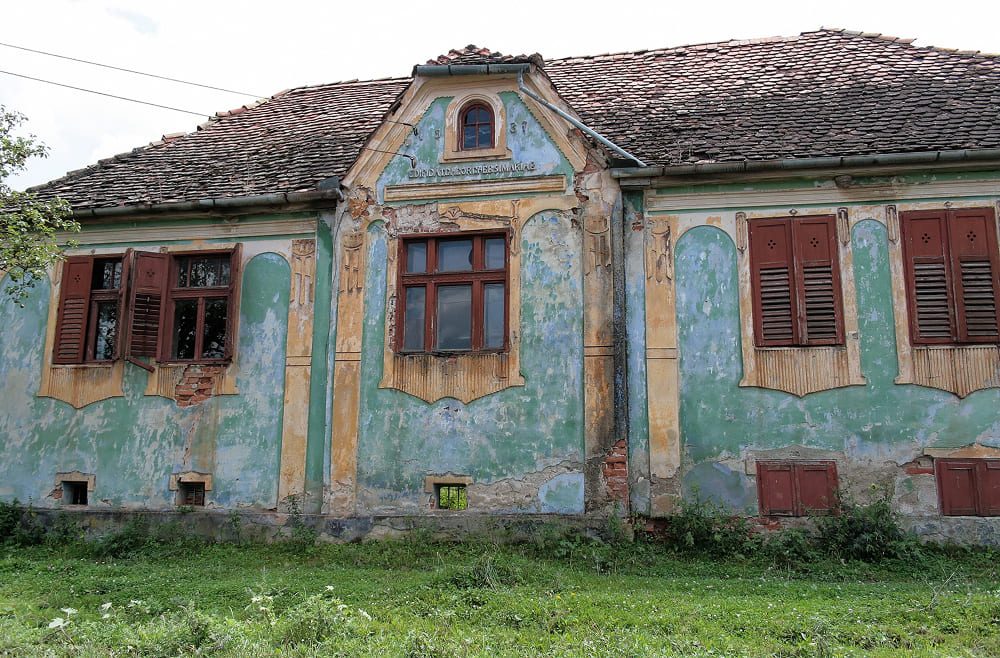
Viscri is not just a museum piece; it is a living, breathing agrarian community where traditional Saxon architecture and rural rhythms have been preserved against the odds. While the church draws the crowds, Viscri village itself is the true architectural marvel.
The settlement follows a classic Saxon linear layout. Lining the central dirt and cobblestone thoroughfare are formidable, vibrantly painted facades, dominated by soft greens and the iconic “Viscri blue”. These homes are built like fortresses themselves, featuring massive wooden gates designed to hide large inner courtyards, barns, and livestock from prying eyes on the street.
Traditional Craftsmanship and Daily Life
Walking through the village, you will notice that the infrastructure hasn’t capitulated to modernity. Horse-drawn carts remain a legitimate form of agricultural transport. You can visit local blacksmiths still forging iron using centuries-old techniques, or observe the local women spinning wool and knitting the thick, durable socks that have become a hallmark of the village’s micro-economy.
This commitment to traditional aesthetics is strictly enforced. You won’t find neon signs, plastic windows, or modern concrete monstrosities here. Every roof uses traditional ceramic tiles, and every facade is finished with breathable lime wash rather than modern acrylic paints.
Worried about missing the hidden cultural depth of the settlement and just doing a superficial walk-through? Maximize your experience by knowing exactly which local craftsmen and architectural details to look for. Uncover 6 compelling reasons why you should visit the surrounding Viscri village to maximize your experience.
Premium Accommodation and Dining in Transylvania
Whether you are exploring the immediate village or returning to the serene, restored grounds of Valea Verde, staying in this region offers a masterclass in adaptive reuse, providing high-end, rustic hospitality without compromising historical integrity.
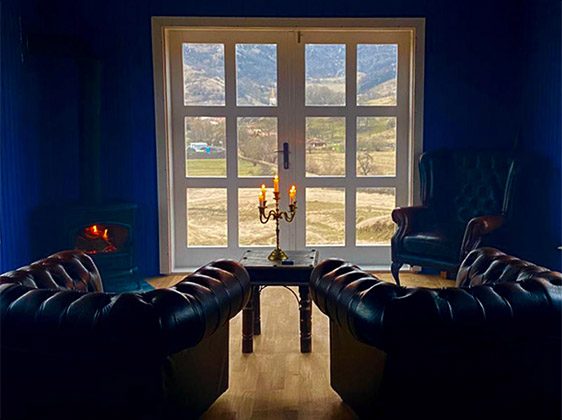
When looking at Viscri Romania accommodation, discard the idea of standard chain hotels. The lodging here consists of traditional homestays and boutique guesthouses. The most famous is, of course, the property owned by King Charles III, which operates as a guesthouse when he is not in residence. These homes feature thick brick walls, restored original woodwork, antique Saxon furniture, and wood-burning terracotta stoves.
Farm-to-Table Dining
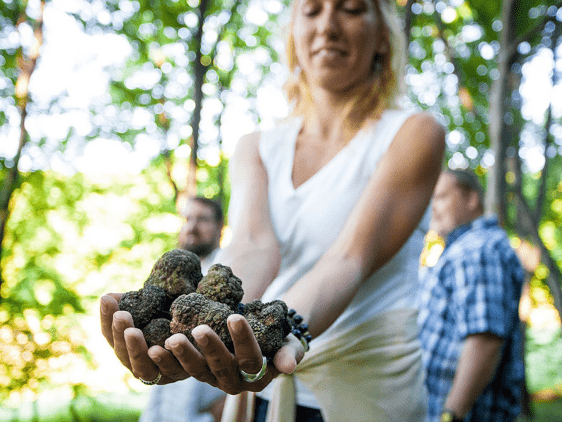
Dining in this region is the definition of slow food. Restaurants are often hidden within the courtyards of the guesthouses. The menus are hyper-seasonal, relying on ingredients sourced directly from the surrounding hills and local farmers. Expect hearty, traditional dishes: rich pork stews, artisanal cheeses, homemade bread baked in outdoor clay ovens, and potent local plum brandy (palincă).
Struggling to find rural accommodation that doesn’t force you to sacrifice premium comfort for historical authenticity? Position yourself at the perfect Transylvanian basecamp. Located just a scenic 80-minute drive from Viscri, our high-end retreat perfectly blends authentic heritage with modern luxury. Book your stay in our Valea Verde restored apartments and secure a flawless sanctuary for your historical expedition.
Expanding Your Itinerary: Other Fortified Churches
Viscri is the crown jewel, but it is just one node in a massive, interconnected defensive network of Saxon fortifications scattered across the Transylvanian plateau.
If you have an interest in historical engineering, exploring these other Saxon fortified churches provides crucial context:
- Saschiz Fortified Church: Just a short drive away, this site is recognizable by its soaring, late-Gothic architecture and a massive defensive clock tower that closely mimics the famous tower in Sighișoara.
- Biertan (The Regional Heavyweight): Further afield lies another UNESCO masterpiece. Biertan features a mind-boggling three tiers of defensive walls and a famous sacristy door secured by a complex lock with 19 simultaneous mechanisms—a true marvel of medieval engineering.
- Prejmer (The Ultimate Bunker): Located closer to Brașov, this is the most heavily fortified church of them all. It boasts impact-resistant walls over 4 meters thick and a continuous ring of 272 honeycomb-like storage rooms built directly into the inner perimeter to safely house families during a siege.
When you use Valea Verde as your Transylvanian basecamp, each of these nearby structures becomes easily accessible, highlighting a different architectural solution to the exact same problem: surviving in a hostile frontier environment.
Overwhelmed by the logistics of planning a multi-stop historical route across the Transylvanian plateau? Eliminate the guesswork and ensure you don’t miss the region’s most crucial defensive structures. Explore the Valea Verde guide to Viscri and Saschiz to seamlessly expand your historical expedition.
Your Action Plan
Do not just read about Viscri and file it away. Take these three steps to execute your trip planning today:
- Map Your Route: Open Google Maps right now and pin Sighișoara, Viscri, and Cund. Calculate the driving distances between these three points to establish the logistical framework of your day trip.
- Audit Your Transport: Research car rental availability out of Brașov or Sibiu for your target dates. The rural roads require a reliable vehicle; do not rely on local bus schedules for this specific region.
- Secure Accommodation Early: Since authentic Saxon guesthouses have extremely limited capacity (often just 3-5 rooms), open a new tab and book your lodging at least three months in advance, especially if traveling between May and September.
Frequently Asked Questions about Viscri Fortified Church
Why is Viscri painted white?
The brilliant white color of the fortified church and many surrounding village homes is due to the traditional use of lime wash. Lime wash is highly breathable, preventing moisture buildup in the ancient stone and brickwork, and acts as a natural antibacterial agent.
Who owns the houses in Viscri today?
While historically owned by Transylvanian Saxons, the mass emigration in the 1990s led to a shift. Today, houses are owned by a mix of local Romanians, Roma families, returning Saxons, and expatriates/conservationists who have purchased properties to restore them.
Can you fly a drone over the Viscri fortified church?
Drone flying over Viscri is heavily restricted due to its UNESCO World Heritage status and local privacy laws. You must obtain explicit permission from the local authorities and church administration before launching any aerial photography equipment.
How much time should I allocate for a visit to Viscri?
To properly explore the fortified church, the interior museum, walk the village streets, and enjoy a traditional meal at a local courtyard restaurant, you should budget an absolute minimum of 3 to 4 hours.
Is the Viscri Fortified Church accessible for visitors with mobility issues?
Due to its 12th-century origins, accessibility is highly limited. The approach involves steep, uneven cobblestone paths, and accessing the defensive towers requires climbing narrow, steep, and original wooden staircases that are not wheelchair accessible.
Photo source: DepositPhotos.com