Râșnov Citadel is a medieval peasant fortress built on a rocky hilltop in Transylvania to shelter the local community during invasions. This is how it differs from royal residences like Bran or Peles. You get access to a preserved village within walls, panoramic views of the Bucegi Mountains, and a tangible connection to 13th-century history just 20 minutes from Brasov.
- Defensive architecture: see walls designed to withstand long sieges.
- Panoramic photography: capture 360-degree views of the Carpathian curvature.
- Accessibility: reach the top easily via a funicular or a short hike.
If you want to understand how common people survived medieval wars in Transylvania, this citadel is your best stop. It is currently under restoration, so access to the inner courtyard might be restricted, but the garden and outer walls remain open and spectacular.
- Râșnov fortress – a medieval stronghold rising from Transylvania’s hills
- History and legends of Râșnov citadel through the centuries
- Inside Râșnov castle – exploring the medieval citadel’s chambers and courtyards
- Visiting Râșnov castle – opening hours and practical information
- Râșnov Romania – gateway to Transylvanian castle adventures
- The sensory experience of Râșnov citadel – views, sounds and atmosphere
- Planning your medieval journey to Râșnov fortress
- Frequently asked questions about Râșnov Castle
Râșnov fortress – a medieval stronghold rising from Transylvania’s hills

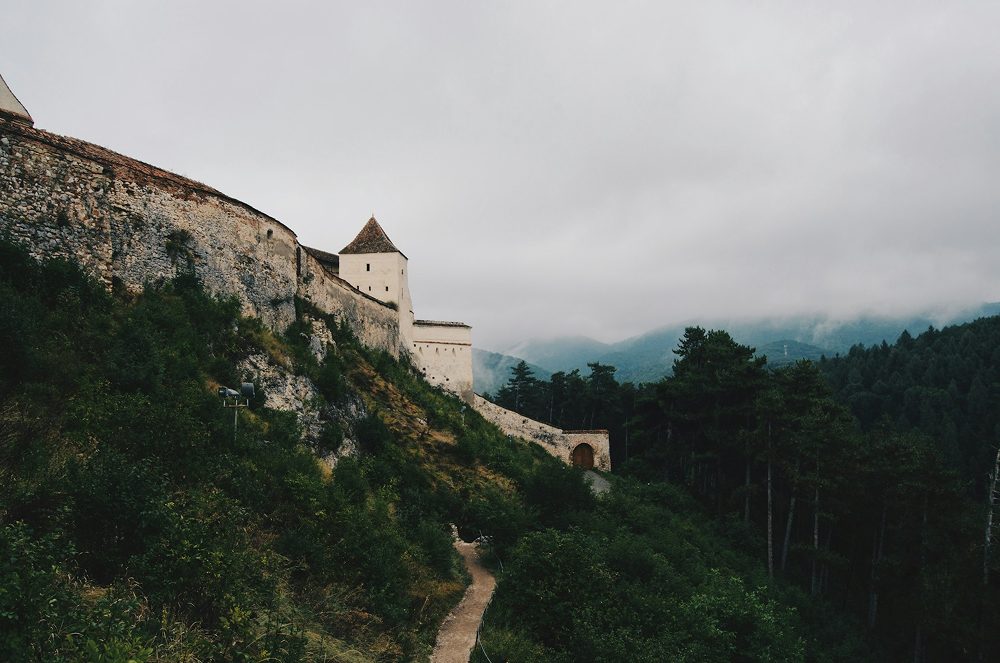
Râșnov fortress served as a shield for the villagers of Râșnov and nearby Cristian, offering them a safe haven for centuries. Unlike palaces built for luxury, this structure focuses entirely on survival and defense against Tatar and Ottoman invasions.
Why does the location matter?
The builders placed the fortress on a rocky hill nearly 150 meters above the town. This position gave them a strategic advantage:
- Visibility: guards could spot enemies from miles away.
- Natural defense: the steep slopes made it nearly impossible for cavalry or siege engines to approach the walls.
- Control: it overlooked the trade route connecting Transylvania to Wallachia.
Architectural ingenuity
You will notice the simple, rugged construction. The walls are built from stone and brick, following the irregular shape of the terrain. The fortification includes:
- Outer court: used for sheltering cattle during sieges.
- Inner court: the habitable area with houses, a school, and a chapel.
- Defense towers: nine towers positioned at vulnerable points.
Imagine you are a villager in 1600. The warning bell rings. You grab your family and supplies, run up the hill, and lock the gates. For the next month, this fortress becomes your entire world. That is the reality Râșnov represents.
Transylvania is full of family-friendly history lessons like this one. If you travel with kids, you need spots that mix history with open spaces. Check out the top 26 places to visit with children in Romania] to plan your next family adventure!
History and legends of Râșnov citadel through the centuries
The Teutonic Knights built the initial wooden fortification in the early 13th century, but the local Saxon community expanded it into the stone fortress you see today. It withstood numerous sieges, surrendering only once in 1612 due to a lack of water supply.
The legend of the well
Water was the citadel’s weakness. The most famous story tells of two Turkish prisoners captured during a siege. The locals promised them freedom if they dug a well through the solid rock in the center of the fortress.
- The effort: they dug for 17 years.
- The depth: the well reaches 146 meters deep.
- The result: they found water, but according to legend, they were killed despite the promise.
- The reality: historical records show skilled Saxon artisans likely dug the well, but the legend adds a layer of tragedy to the site.
Key historical moments
- 1331: first documentary mention of the fortress.
- 1421: the first major Ottoman siege which the fortress withstood.
- 1600: Michael the Brave, the unifier of Romanian provinces, retreated here with his wife.
- 1848: the last time the fortress was used for defensive purposes during the revolution.
The Teutonic Knights and Saxons built these fortresses for war, but their true legacy survives in the peaceful villages further north. If you want to complete your Transylvanian journey by trading the stone walls of a citadel for the rolling hills of a slow-travel retreat, the drive is worth it. Book your stay at Valea Verde to experience authentic Transylvanian hospitality in a restored Saxon village!
Inside Râșnov castle – exploring the medieval citadel’s chambers and courtyards

When you step through the gate, you enter a medieval micro-city. This was not just a military outpost; it was a functioning village designed to support a population for months or even years.
The residential quarters
The inner courtyard is packed with the ruins of small stone houses. Over 30 such houses existed here.
Key features of the inner layout:
- The School: a dedicated building for children to continue learning during sieges.
- The Chapel: built in the 17th century on the site of an older church.
- The Armory: where weapons and gunpowder were stored safely.
What you can see today
While some areas undergo restoration, the layout remains clear. You can walk the paths where artisans once worked.
- Stone foundations: visualize the cramped but safe living conditions.
- Narrow alleys: designed to confuse invaders who breached the first gate.
- Souvenir shops: local artisans now occupy some of the renovated huts, selling traditional crafts.
Exploring fortifications often leads to curiosity about royal residences nearby. You probably want to compare the rugged Râșnov with the opulence of Romanian royalty. Visit Peles Castle to see the architectural contrast between a fortress and a palace.
Visiting Râșnov castle – opening hours and helpful information
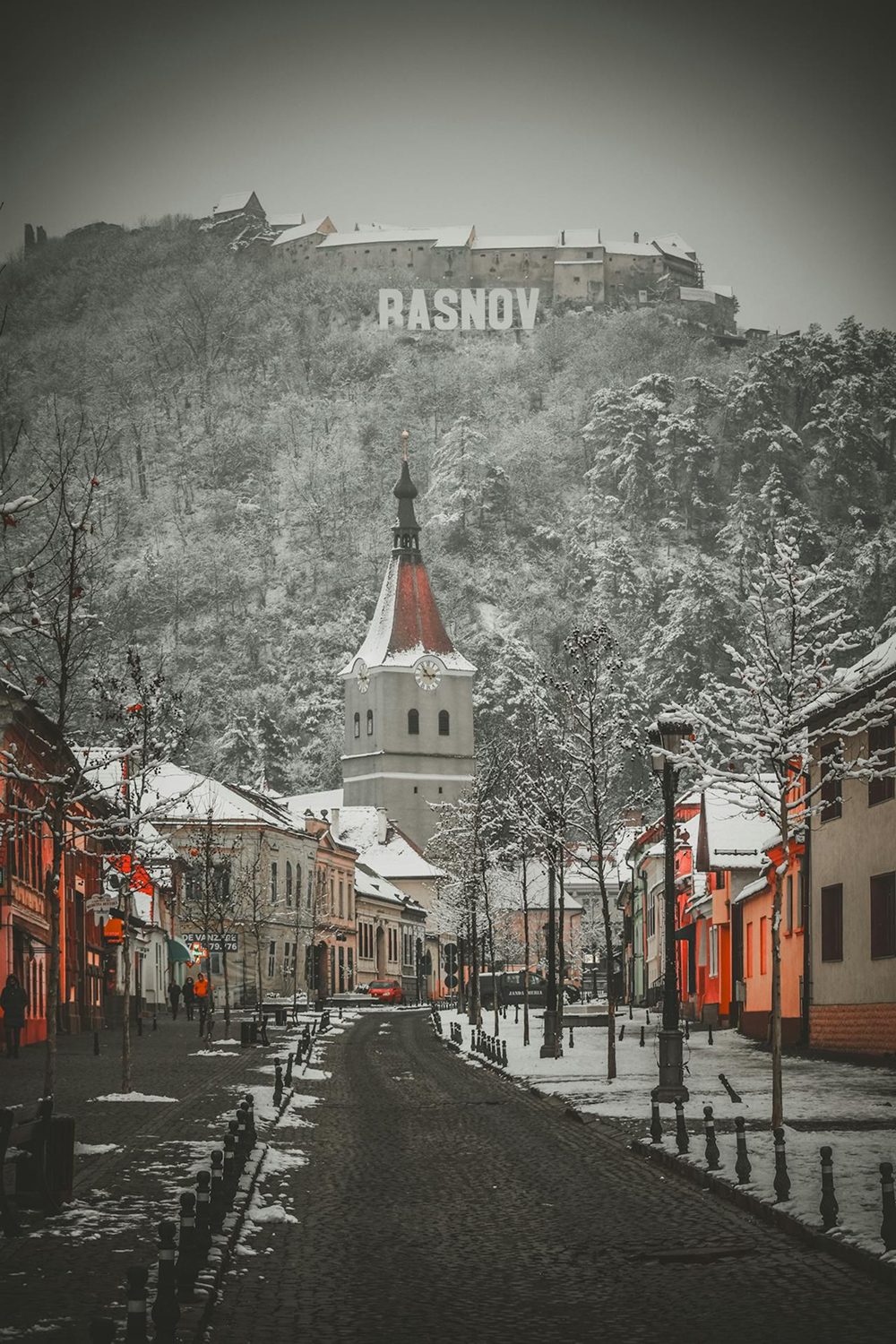
Plan your visit to avoid the midday crowds and ensure the funicular is running. The fortress sits right above the town of Râșnov, making access straightforward but dependent on your mobility preference.
Access methods
The Funicular (Lift)
- Location: departs from the center of Râșnov town.
- Duration: roughly 2 minutes.
- View: offers a clean line of sight over the tiled roofs of the town.
The Hike
- Route: a paved road winds up from the parking lot.
- Duration: 15-20 minutes walking.
- Difficulty: low to medium steepness.
Operating schedule
- Summer (April – September): usually 9:00 AM to 7:00 PM.
- Winter (October – March): usually 9:00 AM to 5:00 PM.
- Note: Always check the official local listing before driving up, as restoration works can temporarily alter hours.
Ticket costs
- Adults: approx. 20-30 RON (standard entry).
- Children/Students: reduced rates available with ID.
- Lift ticket: purchased separately from the fortress entry.
Râșnov Romania – gateway to Transylvanian castle adventures

Râșnov sits perfectly in the center of Romania’s “castle triangle.” It acts as an ideal staging ground because it is less crowded than Bran and closer to Brasov.
Nearby attractions
| Attraction | Distance from Râșnov | Why go there |
| Bran Castle | 15 km (20 min drive) | The “Dracula” legend and royal history. |
| Brasov City | 15 km (20 min drive) | The Black Church and medieval council square. |
| Dino Parc | 500 meters | Life-size dinosaur replicas, great for kids. |
| Valea Cetatii Cave | 3 km | Impressive acoustics and limestone formations. |
Recommendation: Start your day at Bran Castle early to beat the buses, then drive to Râșnov for lunch and a relaxed afternoon exploring the fortress and Dino Parc.
Rural Transylvania hides gems that are quieter but equally impressive. If you appreciate the fortified architecture of Râșnov, you will love the fortified churches of the Saxon villages. Read about Viscri village and 6 reasons why you should visit to extend your cultural journey.
The sensory experience of Râșnov citadel – views, sounds and atmosphere
Visiting Râșnov is not just about reading plaques; it is about what you feel and see. The altitude creates a distinct atmosphere separate from the town below.
The visual panorama
From the highest point of the citadel, you get a 360-degree perspective.
- South: the rugged peaks of the Bucegi Mountains.
- West: the Piatra Craiului ridge, often snow-capped.
- Down below: the terracotta roofs of Râșnov and the patchwork fields of the Barsa Land.
The sounds of history
- Wind: the constant breeze through the stone arches.
- Echoes: footsteps on the cobblestones resonate, giving you a sense of the solitude the guards must have felt.
- Silence: unlike the bustling Bran Castle, Râșnov often offers pockets of quiet contemplation.
Photography guide: best spots and golden hour windows
Râșnov rewards photographers who time their shots carefully. The fortress faces different directions, so light quality shifts dramatically throughout the day. Use this guide to plan your shooting schedule.
| Photo Spot | Best time | Lighting conditions | What you capture | Gear recommendation |
| Funicular viewpoint (base station) | 7:00-9:00 AM | Front-lit fortress | Full citadel with morning mist, Piatra Craiului backdrop | Wide-angle lens (16-35mm) |
| Inner courtyard chapel | 10:00 AM – 12:00 PM | Overhead sun, minimal shadows | Architectural details, stone texture | 24-70mm, polarizing filter |
| Highest defense tower | 6:00-8:00 PM | Golden hour, warm tones | 360° Carpathian panorama, Bucegi Mountains glowing | Wide-angle + tripod |
| Well shaft interior | Midday (11:00 AM – 2:00 PM) | Direct overhead light | Deep vertical shaft, historical detail | Fast lens (f/2.8), high ISO capability |
| Outer walls (western side) | 5:00-7:00 PM (summer) | Side-lit stone texture | Dramatic shadows on fortifications | 70-200mm for compression |
| Town rooftops from above | Sunrise (6:00-7:30 AM) | Soft, diffused light | Terracotta roofs, Barsa Land fields | Telephoto lens (100-400mm) |
Pro tip: Avoid midday (12:00-3:00 PM) for exterior shots—harsh light flattens the stone texture and washes out the Carpathian backdrop.
Planning your medieval journey to Râșnov fortress
A smooth trip requires a bit of foresight, especially regarding gear and timing.
- Check the weather forecast for Râșnov (the citadel is outdoors and exposed).
- Decide if you want to drive or take a train/bus from Brasov (buses run frequently every 30 mins).
- Charge your camera; the light is best during the “golden hour” before sunset.
Plan pe termen lung
- Combine locations: dedicate a full 3-4 days to cover Râșnov, Bran, Peles, and the Saxon villages.
- Book ahead: accommodation in Râșnov fills up quickly in August and around Halloween.
Quick checklist
- Comfortable walking shoes (uneven cobblestones).
- Cash (RON) for small souvenirs or parking.
- Water bottle (especially in summer).
Frequently asked questions about Râșnov Castle
Is the funicular the only way up?
No, you can walk up the paved road which takes about 15-20 minutes. There is also a small “tractor train” that sometimes operates for tourists from the parking lot to the gate.
Are dogs allowed inside the fortress?
Generally, pets are allowed in the outer courtyard if they are on a leash, but rules change frequently regarding the inner museum sections. It is best to ask at the ticket counter.
Is the fortress wheelchair accessible?
Only partially. The funicular is accessible, and the lower garden area is relatively flat, but the inner citadel has rough cobblestones, stairs, and steep inclines that are difficult for wheelchairs.
Can you fly a drone over Râșnov Fortress?
Flying drones usually requires a permit because it is a historical monument and close to populated areas. You should check with the local police or the citadel administration before launching.
Photo source: DepositPhotos, Pexels, Unsplash